
One of India’s most colourful and spiritually energising holidays, Navratri is observed for nine nights and ten days in remembrance of Goddess Durga and her celestial forms. There are many traditions and legends associated with Navratri that emphasise the timeless triumph of good over evil, in addition to the customs, fasting, and joyous celebration. These ancient legends encourage followers to pursue dedication, strength, and wisdom in their own lives in addition to deepening the festival’s meaning.
1. The Story of Goddess Durga and Mahishasura
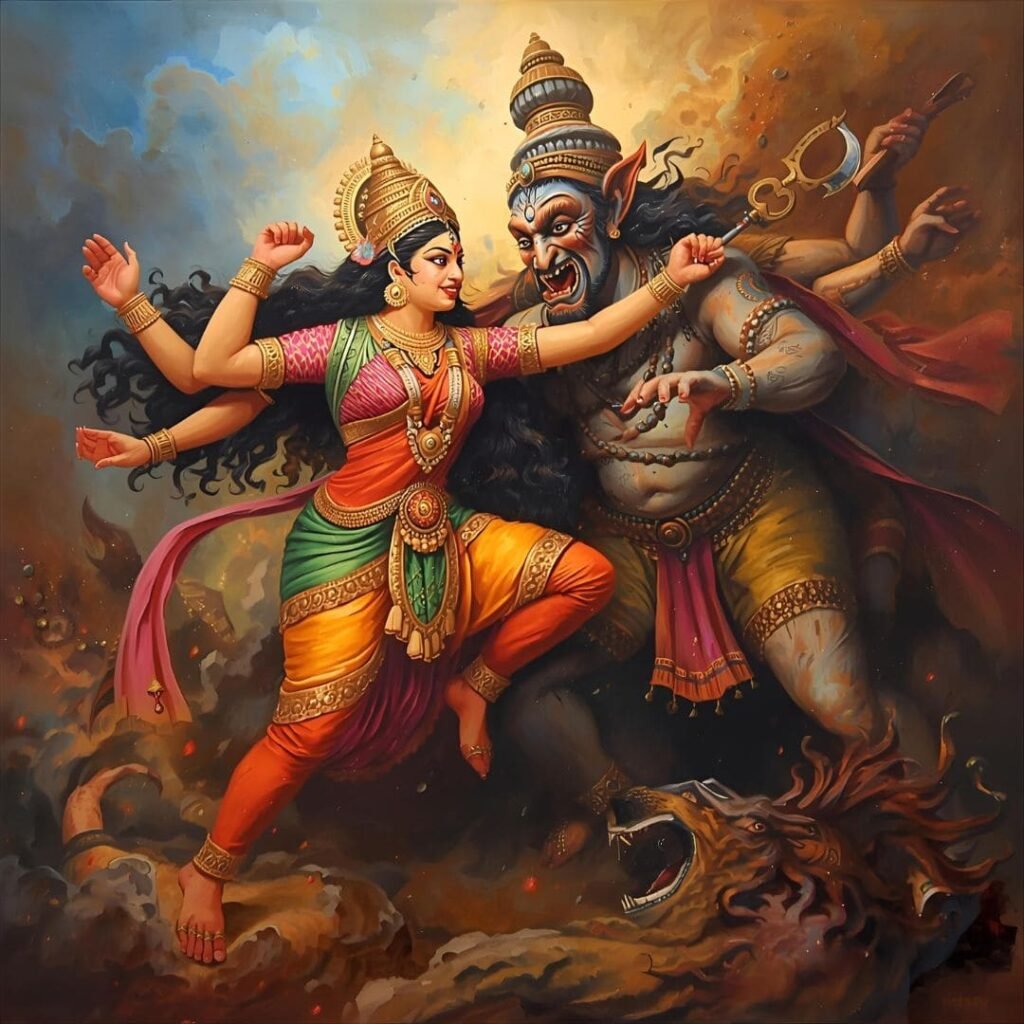
Mahishasura, the demon king, is at the centre of the most famous Navratri myth. Blessed with great strength and the ability to be killed by neither god nor man, Mahishasura wreaked havoc on both heaven and earth. When the gods were unable to restrain his oppression, they pooled their efforts to create Durga, a goddess of celestial warriors. Using celestial weapons and riding a lion, Durga engaged Mahishasura in combat for nine days and nights. Her eventual slaying of him on the ninth day represented the victory of good over evil. Vijayadashami, also known as Dussehra, is observed on the tenth day of Navratri for this reason.
2. The Legend of Lord Rama and Ravana
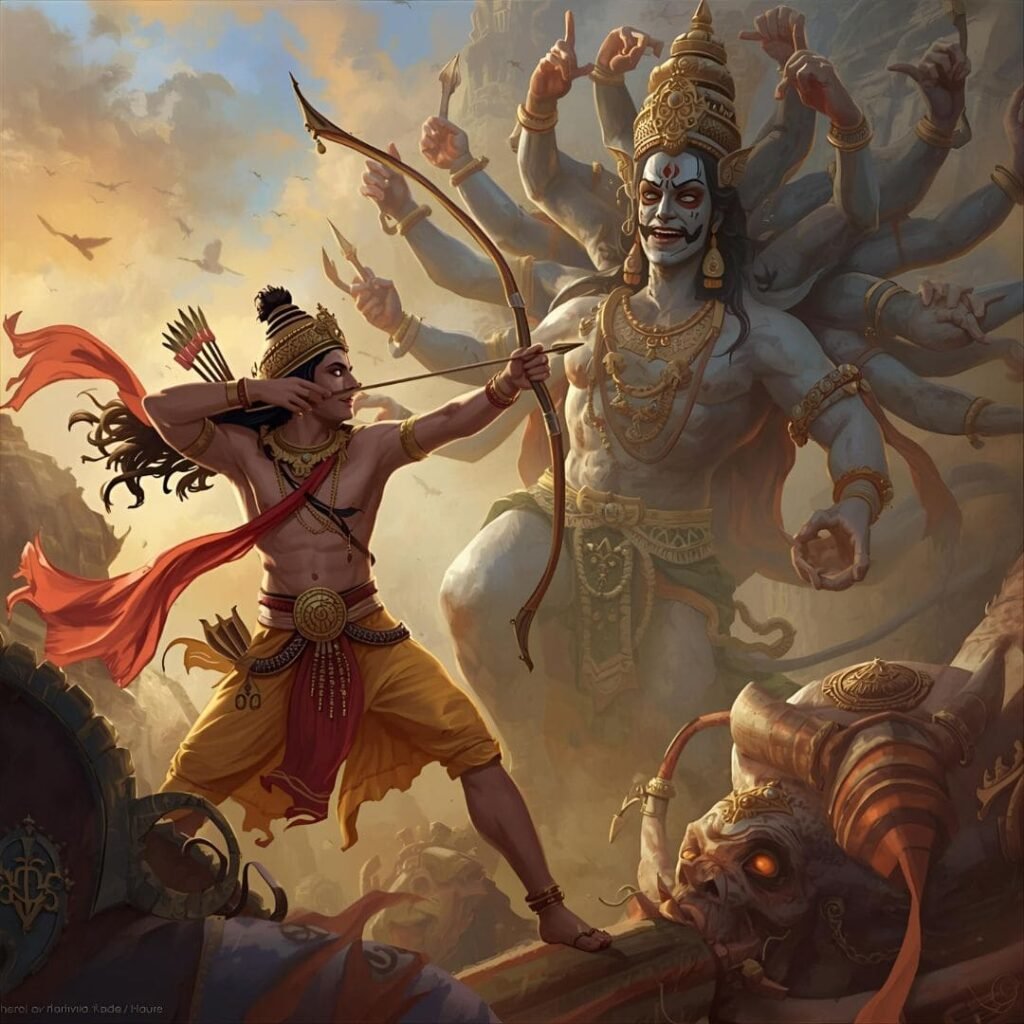
Navratri is associated with the Ramayana in several regions of India. Before facing the demon king Ravana, Lord Rama is said to have worshipped Goddess Durga during this time to obtain her blessings. Dussehra is celebrated as the triumph of dharma (good) over adharma (evil) after Rama vanquished Ravana on the tenth day following nine days of prayers and ceremonies. Ravana’s effigies are burned and lavish Ramlila events are held in North India to commemorate this tale.
3. The Tale of Goddess Durga and Shumbha-Nishumbha
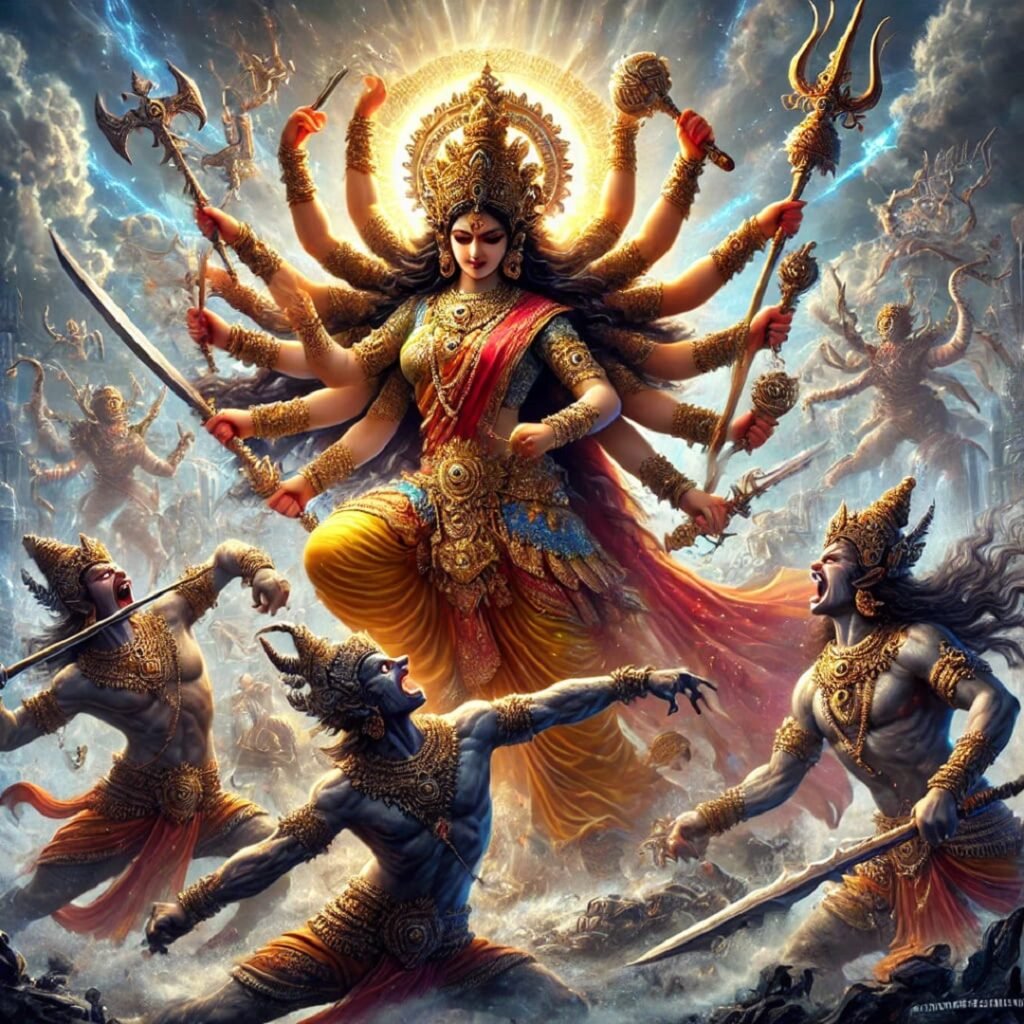
An further noteworthy mythology describes the asuras Shumbha and Nishumbha, who acquired a boon that prevented any male deity from defeating them. Goddess Durga was invoked by the gods as a result of their cruelty and conceit. She took on the terrible form of the Goddess, Chamunda, and vanquished both demons and their powerful armies. This tale represents the greatest protective force—the divine feminine power, or Shakti.
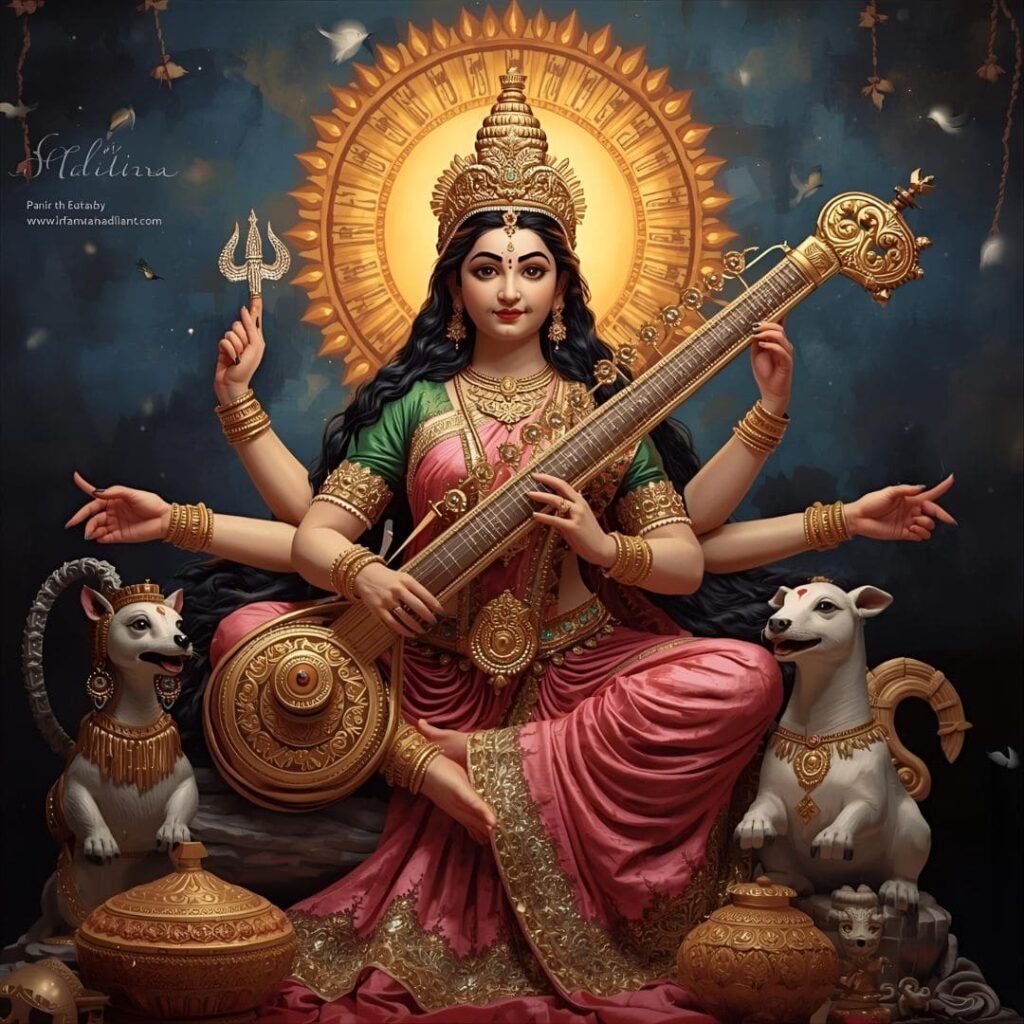
4. The Birth of Goddess Saraswati during Navratr
Navratri is also connected to the goddess Saraswati, who is the representation of knowledge, the arts, and wisdom in South India. Ashtami, Navami, and Vijayadashami are the final three days of the festival, and they are thought to be auspicious for starting new educational endeavours, particularly for kids. Some cultures ask the Goddess for her blessings on knowledge and skill by presenting her with tools, books, and musical instruments.
5. The Tale of Kanya Puja
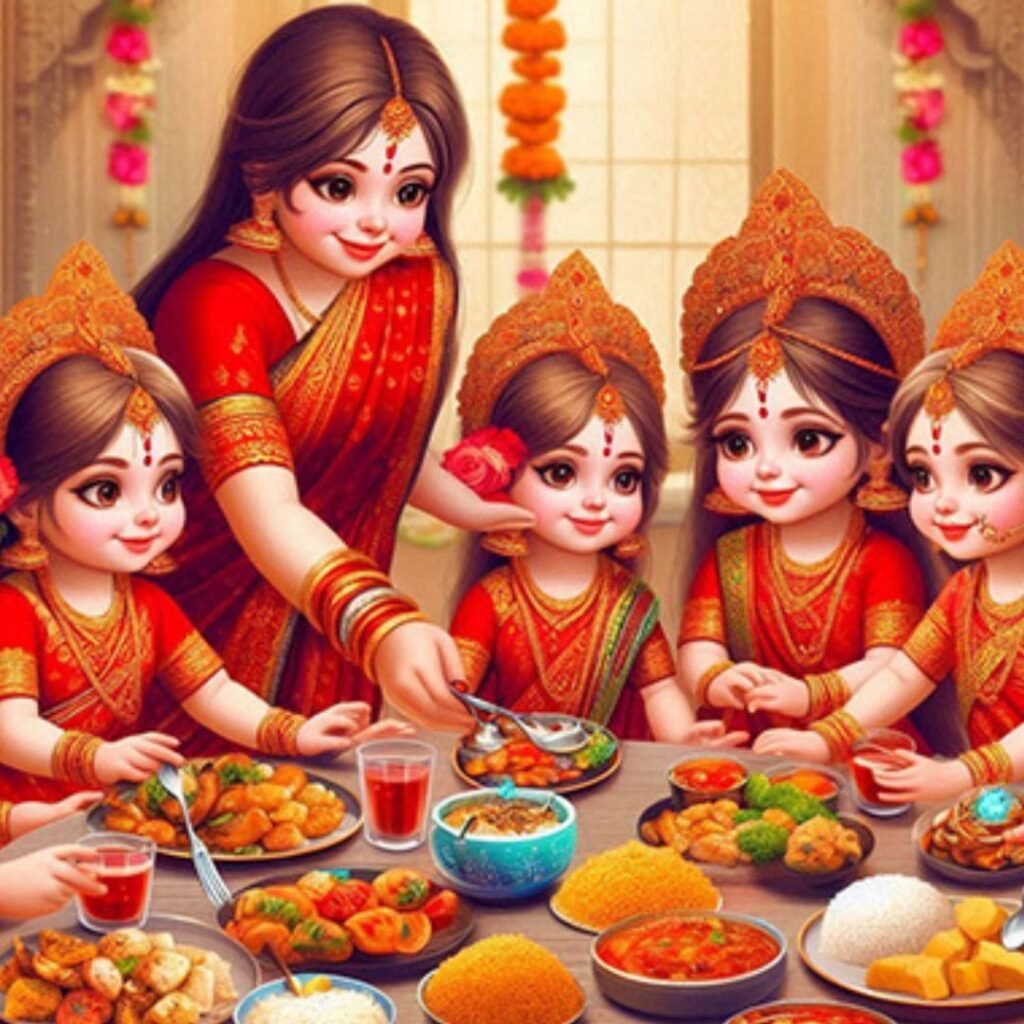
Kanya Puja is another Navratri tradition associated with old stories. Young girls are thought to symbolise the Goddess Durga’s nine manifestations. It is the same as honouring the Goddess herself to worship them during Navratri. One tale states that this ritual began when the Goddess blessed believers by taking the guise of a young girl.
Symbolism of These Legends
These tales all emphasise profound spiritual truths:
• Durga vs. Mahishasura serves as a reminder that divine energy always triumphs over evil and hubris.
• The strength of justice and trust is taught to us in Rama vs. Ravana.
• Saraswati worship exhorts us to cherish knowledge and insight; Durga vs. Shumbha-Nishumbha represents the power of feminine energy.
• Kanya Puja places a strong emphasis on honouring and reverencing the divine feminine in all of her manifestations.
Navratri is not just a festival of lights, dance, and devotion—it is a celebration of timeless stories that inspire courage, truth, and inner strength. By remembering these legends, we connect with the deeper essence of Navratri and carry forward the message that no matter how strong darkness seems, it is always dispelled by the light of divinity.