

Vijayadashami, another name for Dasara, is one of the most important Hindu holidays, and it is eagerly and fervently observed throughout India. It commemorates the victory of good over evil and represents the everlasting triumph of virtue, truth, and righteousness. It falls on the tenth day of the bright half of the Hindu month of Ashwin (September–October).
Mythological Significance
Dasara is deeply rooted in Indian mythology and is celebrated for two major reasons:
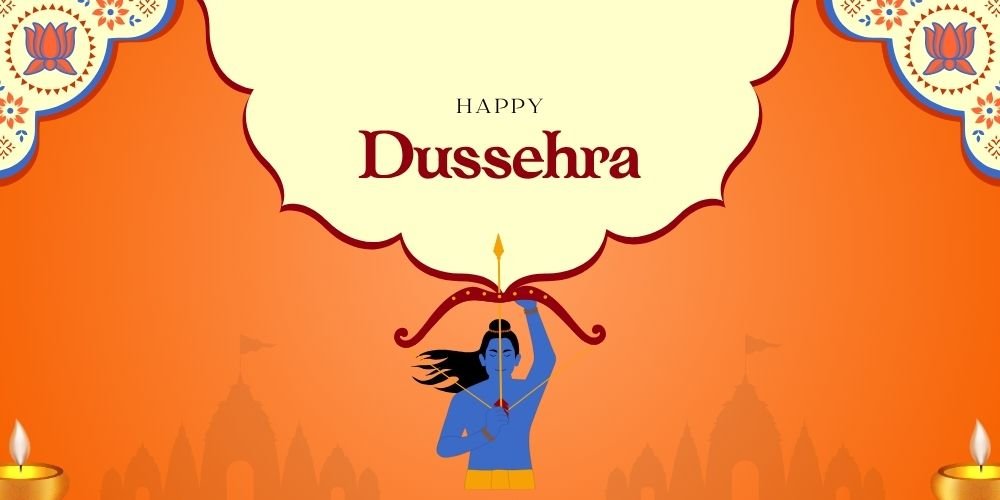
Victory of Lord Rama over Ravana
On this day, the demon king Ravana was vanquished by Lord Rama, according to the epic Ramayana. Despite being a brilliant scholar, Ravana represented evil and conceit. Rama’s triumph stands for the strength of morality, dharma, and truth. Ramlila is a magnificent enactment of this tale, and in various regions of India, effigies of Ravana, Meghnath, and Kumbhkaran are burned as a symbol of the defeat of evil.
Victory of Goddess Durga over Mahishasura
Goddess Durga, who fought the demon Mahishasura for nine nights before defeating him on the tenth day, is also linked to Dasara in another well-known narrative. This triumph represents the triumph of feminine divine power (Shakti) over antagonistic forces.
Regional Celebrations
Dasara is celebrated differently across India, each region adding its own cultural flavor:
- North India: The festival highlights Lord Rama’s victory with grand Ramlila performances and burning of Ravana’s effigies.
- West Bengal & Eastern India: It coincides with Durga Puja, where idols of Goddess Durga are worshipped and then immersed in rivers or seas with great devotion.
- Mysore, Karnataka: The famous Mysore Dasara is celebrated with a royal procession, decorated elephants, cultural programs, and illumination of the Mysore Palace.
- Maharashtra: People worship tools, vehicles, and books in a tradition called Ayudha Puja. Families also exchange apta leaves as a symbol of gold and good luck.
Rituals and Traditions
- Devotees perform special pujas and visit temples.
- Weapons, books, and instruments are worshipped, symbolizing respect for knowledge and work.
- Families gather to celebrate with sweets, cultural programs, and processions.
- Farmers often begin new agricultural cycles, as the festival marks a time of prosperity.
Spiritual and Social Significance
Dasara is more than just a religious celebration; it has a deeper meaning. It serves as a reminder that, despite their apparent strength, wickedness, conceit, and injustice will always lose out to righteousness and truth. It encourages people to overcome their inner negativity, such pride, greed, and rage, in the same way as Lord Rama and Goddess Durga vanquished the demons.
Dasara is a proclamation of optimism, brightness, and hope. It fosters cultural links, brings people together, and inspires them to follow the correct way. The chants of triumph reverberate and Ravana’s effigies burn, reminding us that good will always win out.
In addition to honouring the historical legends, let’s fight to overcome our inner conflicts during Dasara.