Diwali, also called Deepavali, is a festival steeped in spiritual symbolism and ancient mythology, and it is more than just a celebration of lights, happiness, and wealth. Various myths from religious texts, each symbolising the triumph of good over evil and light over darkness, explain the significance of this celebration throughout India. Let us investigate the main mythological tales connected to Diwali that contribute to the deep meaning of this celebration.
Return of Lord Rama to Ayodhya
Epic: Ramayana
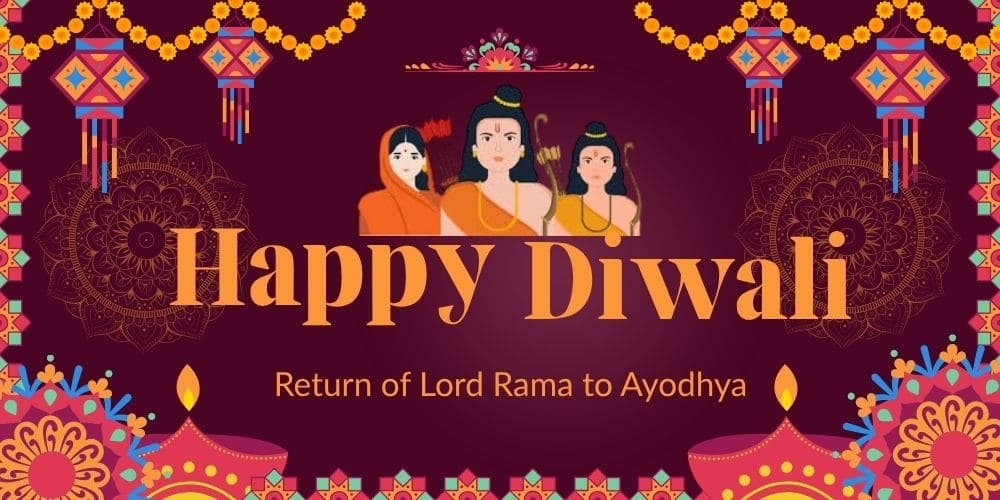
- The story of Lord Rama returning to Ayodhya after 14 years of exile is one of the most well-known Diwali stories. He vanquished Ravana, the demon king who had abducted Sita, at this period. To celebrate the return of their beloved ruler, the people of Ayodhya ignited rows of oil lights, or diyas. This incident represents:
- Triumph of good over evil
- Restoration of dharma (righteousness)
- Celebration of homecoming and hope
Diwali, therefore, marks the joyous return of light, truth, and prosperity.
Goddess Lakshmi’s Birth and Marriage
Scriptures: Puranas
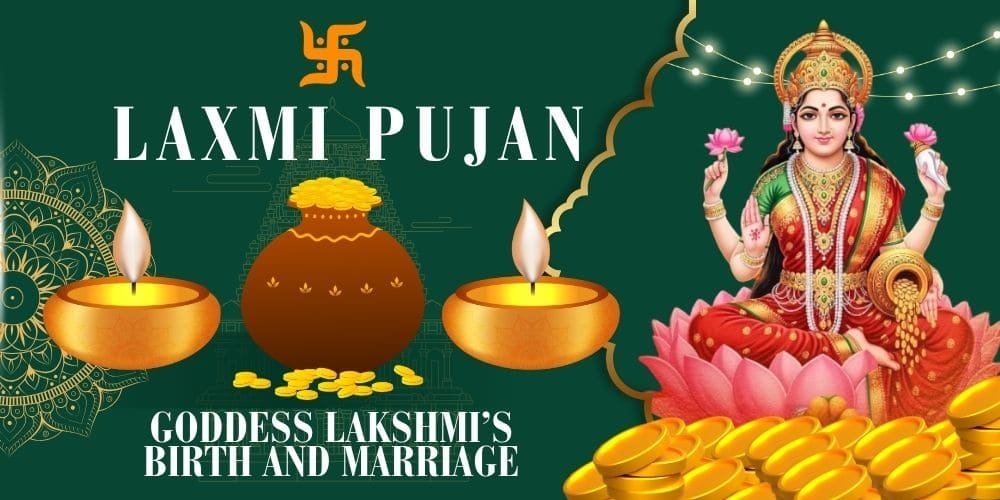
The goddess of wealth and prosperity, Lakshmi, is said to have arisen from the roiling cosmic ocean in ancient mythology (Samudra Manthan). She is said to have chosen Lord Vishnu as her eternal consort on the day of Diwali, when she took on human form.
Lakshmi Puja is therefore the most significant ritual carried out on Diwali night, drawing prosperity, harmony, and plenty into households.
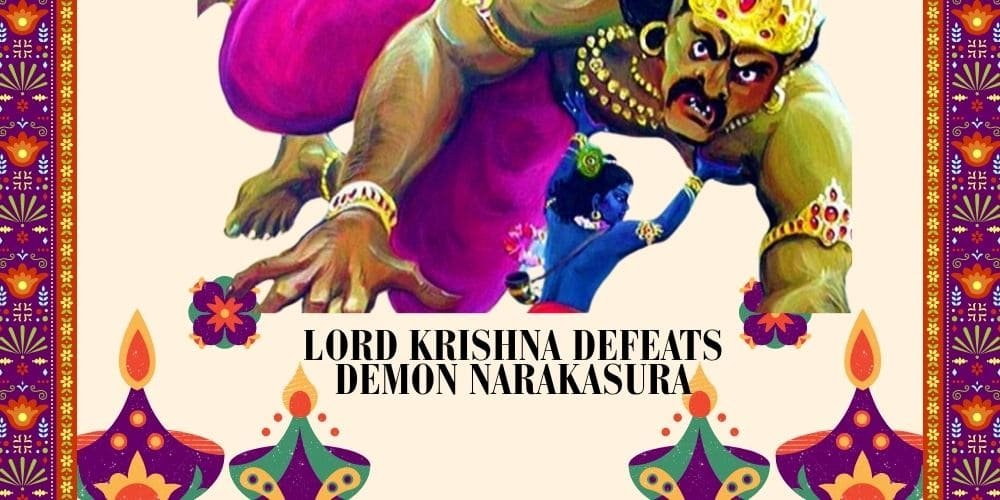
Lord Krishna Defeats Demon Narakasura
Epic: Mahabharata and Bhagavata Purana
The tale of Lord Krishna and his spouse Satyabhama vanquishing the malevolent monster Narakasura is another significant mythology. This monster had terrorised heaven and earth and imprisoned 16,000 women.
The day Narakasura was killed is observed as Naraka Chaturdashi or Choti Diwali, representing:
- Freedom from negativity
- Destruction of ignorance
- Liberation of the soul
Pandavas Return After Exile
Epic: Mahabharata
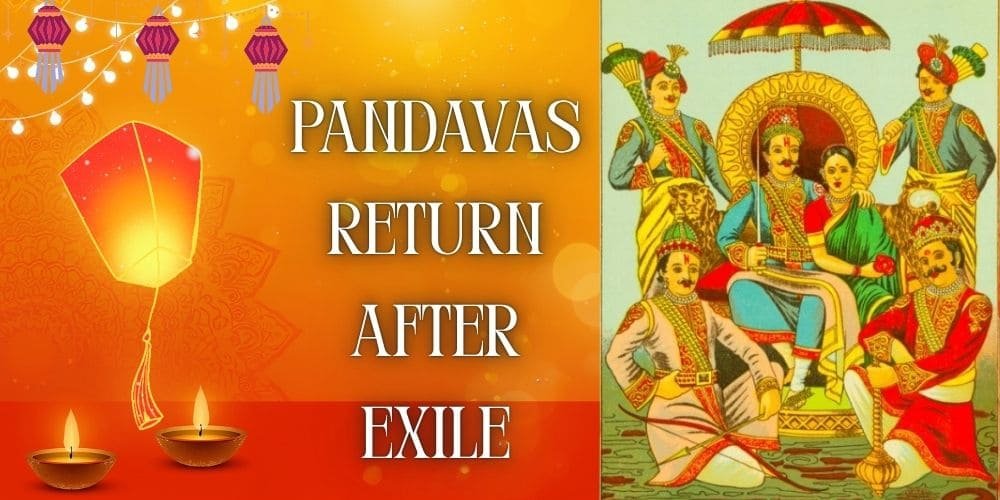
The Mahabharata states that on the day of Diwali, the five Pandava brothers returned to Hastinapura after a twelve-year exile. The festival was a celebration of justice restored, and the citizens lit clay lamps and distributed candy to commemorate their homecoming.
Spiritual Meaning of Diwali
Beyond mythological tales, Diwali holds deep spiritual significance:
- Light symbolizes divine knowledge
- Darkness represents ignorance
- Lighting diyas signifies removing negativity and inviting positivity
- Firecrackers symbolize the destruction of evil thoughts and awakening of consciousness